Sunday, December 15, 2024

The Set of Poe

George Ade (1866–1944)
From American Christmas Stories

The Book Hunters (1907), a painting by American artist Gordon Grant (1875–1962). Reproduced in the October 2, 1909, issue of Collier’s.
“When I landed in Chicago, in 1890, I owned a suitcase which looked like leather, which it was not, and a very small trunk which looked like pressed paper, which it was,” recalled George Ade thirty-five years later. “I had absolutely no funds and I owed a board bill to the Misses Niemantsverdriet, who ran the old Stockton House in Lafayette [Indiana]. I remember that name because I wrote the gentle and patient maiden ladies so many letters promising to remit soon.”

Ade had graduated from Purdue University three years earlier. After a brief stint working at two newspapers in Lafayette, Ade heeded the invitation from John T. McCutcheon, a close friend and fraternity brother, to join him in Chicago. For the past year McCutcheon had been working as an illustrator for the morning edition of the Daily News, and he helped his friend get a spot as a reporter. “After I went on the Morning News for a tryout, I had small confidence in my ability,” Ade wrote. “I was afraid of the cable cars and my own shadow.”

Ade’s first beat on the paper was the weather. The vivid anecdotes and humorous quotes from residents that filled his reports made an impression on the paper’s managers. “The city editor said I was the only one on the staff who could work up an excitement over the weather.” Soon he was added to the city desk. “I went to race-tracks and ball parks and prize-fights and lectures and got a new thrill every second.” He began getting readers’ attention with his reporting on urban life, especially during the Chicago World’s Fair.

In 1893, the morning Daily News changed its name to the Record. Once the hullaballoo from the Fair died down, Ade was given a new daily department on the editorial page called “Stories of the Streets and of the Town.” McCutcheon was assigned as the illustrator for the column. Six days a week, for more than six years, the two men tramped through the city and sought out offbeat stories, anecdotes, and people, and they filled up their allotted space with up to two thousand words of text and accompanying illustrations. Ade used the column to write social and cultural observations, satires and parodies, and short stories and light verse. He developed a series he referred to as “fables in slang.” He also created episodes featuring invented characters, including the office boy Artie, the shoeshine boy Pink Marsh, and the street vendor Doc Horne—whose adventures (including McCutcheon’s illustrations) were collected into three popular books. “From 1893 to 1900 I rambled about Chicago and recorded everything unimportant,” he recalled in his characteristically self-effacing manner.

When Ade left the Record, he moved to New York and, during the first decade of the twentieth century, he enjoyed twin careers as a nationally syndicated columnist and as a successful Broadway playwright (The College Widow, The County Chairman). By 1910, he was one of American’s most famous writers and a millionaire, yet today his work is little known. One of the short stories he wrote for the Record, however, has appeared in several Christmas anthologies over the last few decades, most recently in Library of America’s American Christmas Stories. “The Set of Poe” reminds many readers of O. Henry’s “The Gift of the Magi,” with a similar plot and a sense of whimsy—but a very different outcome. It’s even possible (although there’s no evidence) that O. Henry got the idea for his story from Ade, who had included the tale in the widely read 1903 collection In Babel: Stories of Chicago; “The Gift of the Magi” appeared in New York Sunday World two years later, in December 1905.

Ade spent his remaining years traveling the world while writing one-act plays for community theaters, more fables for newspapers, essays and stories for magazines, scripts for silent films, and screenplays for movies featuring Will Rogers. He never again achieved the success he had enjoyed during his two-decade heyday, and he divided his time between Hazelden, his 400-acre estate in Indiana, and, from December through April, a rented home in Miami.

In the fall of 1927, before he left for Florida, he sent to the president of the Women’s Press Club of Indiana a letter that was probably meant to be read at their annual Christmas dinner:

I am rather out of touch with the old-fashioned Christmas. . . . I am a bachelor but if what they tell me about the young people is true, they can no longer be fooled by any myth regarding a very old gentleman driving reindeers. They probably know what they are going to get, a week before Christmas, and what the darn things cost. However, I am just talking from hearsay. I have been south every Christmas for a number of years, and down there the only special observances seem to be the playing of golf by the adults and the exploding of firecrackers by the young ones. There is no suggestion of Christmas when the beach is crowded with bathers. I have always been in favor of Christmas and I hope that somewhere it is still being observed.

*   *   *
Note: The above quotes from Ade about his experiences in Chicago are from “To Get Along, Keep on Being a Country Boy,” a memoir he published in Hearst’s International (December 1925).


*   *   *
For this week’s selection, we depart from the usual format and reproduce the selection, in its entirety, below.
You may also download it as a PDF or view it in Google Docs.
The Set of Poe

Mr. Waterby remarked to his wife: “I’m still tempted by that set of Poe. I saw it in the window to­day, marked down to fifteen dollars.”

“Yes?” said Mrs. Waterby, with a sudden gasp of emotion, it seemed to him.

“Yes—I believe I’ll have to get it.”

“I wouldn’t if I were you, Alfred,” she said. “You have so many books now.”

“I know I have, my dear, but I haven’t any set of Poe, and that’s what I’ve been wanting for a long time. This edition I was telling you about is beautifully gotten up.”

“Oh, I wouldn’t buy it, Alfred,” she repeated, and there was a note of pleading earnestness in her voice. “It’s so much money to spend for a few books.”

“Well, I know, but—” and then he paused, for the lack of words to express his mortified surprise.

Mr. Waterby had tried to be an indulgent husband. He took a selfish pleasure in giving, and found it more blessed than receiving. Every salary day he turned over to Mrs. Waterby a fixed sum for household expenses. He added to this an allowance for her spending money. He set aside a small amount for his personal expenses and deposited the remainder in the bank.

He flattered himself that he approximated the model husband.

Mr. Waterby had no costly habits and no prevailing appetite for anything expensive. Like every other man, he had one or two hobbies, and one of his particular hobbies was Edgar Allan Poe. He believed that Poe, of all American writers, was the one unmistakable “genius.”

The word “genius” has been bandied around the country until it has come to be applied to a long-haired man out of work or a stout lady who writes poetry for the rural press. In the case of Poe, Mr. Waterby maintained that “genius” meant one who was not governed by the common mental processes, but “who spoke from inspiration, his mind involuntarily taking superhuman flight into the realm of pure imagination,” or something of that sort. At any rate, Mr. Waterby liked Poe and he wanted a set of Poe. He allowed himself not more than one luxury a year, and he determined that this year the luxury should be a set of Poe.

Therefore, imagine the hurt to his feelings when his wife objected to his expending fifteen dollars for that which he coveted above anything else in the world.

As he went to his work that day he reflected on Mrs. Waterby’s conduct. Did she not have her allowance of spending money? Did he ever find fault with her extravagance? Was he an unreasonable husband in asking that he be allowed to spend this small sum for that which would give him many hours of pleasure, and which would belong to Mrs. Waterby as much as to him?

He told himself that many a husband would have bought the books without consulting his wife. But he (Waterby) had deferred to his wife in all matters touching family finances, and he said to himself, with a tincture of bitterness in his thoughts, that probably he had put himself into the attitude of a mere dependent.

For had she not forbidden him to buy a few books for himself? Well, no, she had not forbidden him, but it amounted to the same thing. She had declared that she was firmly opposed to the purchase of Poe.

Mr. Waterby wondered if it were possible that he was just beginning to know his wife. Was she a selfish woman at heart? Was she complacent and good-natured and kind only while she was having her own way? Wouldn’t she prove to be an entirely different sort of woman if he should do as many husbands do—spend his income on clubs and cigars and private amusement, and gave her the pickings of small change?

Nothing in Mr. Waterby’s whole experience as a married man had so wrenched his sensibilities and disturbed his faith as Mrs. Waterby’s objection to the purchase of the set of Poe. There was but one way to account for it. She wanted all the money for herself, or else she wanted him to put it into the bank so that she could come into it after he—but this was too monstrous.

However, Mrs. Waterby’s conduct helped to give strength to Mr. Waterby’s meanest suspicions.

Two or three days after the first conversation she asked: “You didn’t buy that set of Poe, did you, Alfred?”

“No, I didn’t buy it,” he answered, as coldly and with as much hauteur as possible.

He hoped to hear her say: “Well, why don’t you go and get it? I’m sure that you want it, and I’d like to see you buy something for yourself once in a while.”

That would have shown the spirit of a loving and unselfish wife.

But she merely said, “That’s right; don’t buy it,” and he was utterly unhappy, for he realised that he had married a woman who did not love him and who simply desired to use him as a pack-horse for all household burdens.

As soon as Mr. Waterby had learned the horrible truth about his wife he began to recall little episodes dating back years, and now he pieced them together to convince himself that he was a deeply wronged person.

Small at the time and almost unnoticed, they now accumulated to prove that Mrs. Waterby had no real anxiety for her husband’s happiness. Also, Mr. Waterby began to observe her more closely, and he believed that he found new evidences of her unworthiness. For one thing, while he was in gloom over his discovery and harassed by doubts of what the future might reveal to him, she was content and even-tempered.

The holiday season approached and Mr. Waterby made a resolution. He decided that if she would not permit him to spend a little money on himself he would not buy the customary Christmas present for her.

“Selfishness is a game at which two can play,” he said.

Furthermore, he determined that if she asked him for any extra money for Christmas he would say: “I’m sorry, my dear, but I can’t spare any. I am so hard up that I can’t even afford to buy a few books I’ve been wanting a long time. Don’t you remember that you told me that I couldn’t afford to buy that set of Poe?”

Could anything be more biting as to sarcasm or more crushing as to logic?

He rehearsed this speech and had it all ready for her, and he pictured to himself her humiliation and surprise at discovering that he had some spirit after all and a considerable say-so whenever money was involved.

Unfortunately for his plan, she did not ask for any extra spending money, and so he had to rely on the other mode of punishment. He would withhold the expected Christmas present. In order that she might fully understand his purpose, he would give presents to both of the children.

It was a harsh measure, he admitted, but perhaps it would teach her to have some consideration for the wishes of others.

It must be said that Mr. Waterby was not wholly proud of his revenge when he arose on Christmas morning. He felt that he had accomplished his purpose, and he told himself that his motives had been good and pure, but still he was not satisfied with himself.

He went to the dining-room, and there on the table in front of his plate was a long paper box, containing ten books, each marked “Poe.” It was the edition he had coveted.

“What’s this?” he asked, winking slowly, for his mind could not grasp in one moment the fact of his awful shame.

“I should think you ought to know, Alfred,” said Mrs. Waterby, flushed, and giggling like a schoolgirl.

“Oh, it was you——”

“My goodness, you’ve had me so frightened! That first day, when you spoke of buying them and I told you not to, I was just sure that you suspected something. I bought them a week before that.”

“Yes—yes,” said Mr. Waterby, feeling the saltwater in his eyes. At that moment he had the soul of a wretch being whipped at the stake.

“I was determined not to ask you for any money to pay for your own presents,” Mrs. Waterby continued. “Do you know I had to save for you and the children out of my regular allowance. Why, last week I nearly starved you, and you never noticed it at all. I was afraid you would.”

“No, I—didn’t notice it,” said Mr. Waterby, brokenly, for he was confused and giddy.

This self-sacrificing angel—and he had bought no Christmas present for her!

It was a fearful situation, and he lied his way out of it.

“How did you like your present?” he asked.

“Why, I haven’t seen it yet,” she said, looking across at him in surprise.

“You haven’t? I told them to send it up yesterday.”

The children were shouting and laughing over their gifts in the next room, and he felt it his duty to lie for their sake.

“Well, don’t tell me what it is,” interrupted Mrs. Waterby. “Wait until it comes.”

“I’ll go after it.”

He did go after it, although he had to drag a jeweller away from his home on Christmas-day and have him open his great safe. The ring which he selected was beyond his means, it is true, but when a man has to buy back his self-respect, the price is never too high.

Originally published in the Chicago Record, December 28, 1897; collected in In Babel: Stories of Chicago (1903).

Sunday, December 1, 2024

The Joy of Nelly Deane

Willa Cather (1873–1947)
From Willa Cather: Stories, Poems, & Other Writings

“I’m engaged, Peggy.” Illustration by Paul Julien Meylan (1882–1962) to accompany “The Joy of Nelly Deane” in the October 1911 issue of The Century Illustrated Monthly Magazine. Half-tone plate engraved for the magazine by Charles Wesley Chadwick (1861–1940). Image courtesy of the Willa Cather Archive.
“I expect I shall have to go to London again in the spring, but I am hoping to get home next summer, and to run out for a little visit with you,” Willa Cather wrote from New York to her Aunt Franc in Bladen, Nebraska, at the beginning of 1910. “The one this summer was such a satisfactory visit. It was the first time I’ve really seen you for years. . . . There is no place in the world where I can be so happy or rest so well.” As it happened, Cather wouldn’t make it to London that year, and she didn’t return to Nebraska until the summer of 1912. In the meantime, she published a story, “The Joy of Nelly Deane,” that perhaps not coincidentally features a narrator returning from Europe to visit the western prairie town of Riverbend, “the only place that had ever really been home to me.”

Cather had spent the previous fifteen years writing stories for national magazines, but she had doubts about her own talent and had become dissatisfied with her fiction. “I wanted to write after the best style of Henry James—the foremost mind that ever applied itself to literature in America,” she told an interviewer in 1921. “I was dazzled. I was trying to work in a sophisticated medium and write about highly developed people whom I knew only superficially. . . . I had been trying to sing a song that did not lie in my voice.”

After Cather began working at McClure’s in 1906, she found herself overwhelmed with editorial responsibilities, and during her early years at the magazine she wrote and published a handful of soon-forgotten stories. “She still was playing the sedulous ape to Henry James in matters of style and technique, character, subject matter, and theme,” confirms Cather biographer James Woodress. Then, in March 1908, she met Annie Fields and her companion, Sarah Orne Jewett, the renowned author of the story cycles Deephaven and The Country of the Pointed Firs. She visited the couple several times over the next few months, and Cather and Jewett corresponded during the following year. Three of Cather’s letters to Jewett have survived and the manuscripts are located among Jewett’s papers at Harvard. None of Jewett’s original letters to Cather are extant, however; we have only the edited (and probably abridged) texts of three of them because Fields published a selection of Jewett’s letters in 1911, two years after her death at the age of 59.

“The first three stories Cather wrote after meeting Jewett show the immediate impact of Jewett’s influence,” writes Sharon O’Brien, the editor of Library of America’s Willa Cather volumes. “Evidently, Cather’s receptivity to her mentor’s literary example grew along with their developing friendship.” Cather published the first story, “On the Gull’s Road,” in the pages of McClure’s soon after her stay in Boston. The narrator, an ambassador, recalls twenty years earlier when, returning from a diplomatic post in Genoa to New York, he fell in love with a fellow passenger, a dying woman in a loveless marriage to the ship’s engineer. Anticipating that Jewett wouldn’t care for the story, Cather appears not to have sent it to her; “I am afraid you won’t like it, dear Lady. The scent of the tube-rose seems to cling to it still,” Cather wrote in late October 1908, referring to the story’s romantic flourishes.

In the first decade of the twentieth century, one couldn’t hide a story in the pages of a magazine as popular as McClure’s, and Jewett soon came across “On the Gull’s Road” when she received her copy of the December issue. “With what deep happiness and recognition I have read the ‘McClure’ story,—night before last I found it with surprise and delight,” she wrote to Cather soon after the story appeared. “You have drawn your two figures of the wife and her husband with unerring touches and wonderful tenderness for her.” Yet Jewett gently if pointedly criticized Cather’s choice of narrator: “The lover is as well done as he could be when a woman writes in the man’s character,—it must always, I believe, be something of a masquerade. I think it is safer to write about him as you did about the others, and not try to be he! And you could almost have done it as yourself—a woman could love her in that same protecting way—a woman could even care enough to wish to take her away from such a life, by some means or other.” In a subsequent letter, Jewett expanded upon her remarks, and she urged Cather to leave the magazine and “find a quiet place” to focus on her writing; “your vivid, exciting companionship in the office must not be your audience.”

Jewett had told Cather that virtually all the background for her own stories derived from her childhood memories of South Berwick, Maine, so Cather had assumed she was more likely to enjoy her next story. Along with the letter that made light of “Gulls’ Road,” Cather enclosed a draft of “The Enchanted Bluff,” a sketch about six Nebraskan boys on a camping trip. After one of the boys relates the legend of the lost tribe of the Enchanted Mesa, they all imagine visiting the storied butte in New Mexico as soon as they are free to do so as adults. “I somehow think [it] might interest you a little—because it is different from the things you knew when you were a child,” Cather wrote to Jewett. “I make bold to send this scorned tale (Mr. McClure says it is all introduction) and I pray you cast your eye upon it in some empty half hour. It is about a place a weary long way from South Berwick.” Although her employer, S. S. McClure, rejected it for the magazine, the editor of Harper’s accepted it only weeks later and it appeared in the April 1909 issue.

We do not know if Jewett read the story or otherwise responded before she suffered a debilitating stroke in March; she died in June. During this period, Cather finished a third story, which was accepted by Century magazine that summer, and it would seem she had written it with her mentor very much in mind. “The Joy of Nelly Deane” notably features a first-person female narrator—something of a rarity in Cather’s oeuvre. In several ways, O’Brien points out, the story “shows the impact of Jewett’s legacy: not only does Cather dispense with her Jamesian voice in returning to Nebraska subject matter, but she also envisions creative power as female; the story’s heroine Nelly is a gifted singer. Jewett’s harmonious uniting of ‘woman’ and ‘writer’ in her life and work had helped Cather to integrate these seemingly opposed identities, and this reconciliation gave her new confidence and direction as a writer.”

Two years later, in May 1911, Cather visited Fields in Boston and spent a week surrounded by Jewett’s books and possessions. The following month she stayed with Jewett’s sister, Mary, at the family residence in Maine, where she sat at her mentor’s old desk and wrote letters to friends. Cather had not written a single work of fiction since Jewett’s death, but she had just quit her full-time job at McClure’s and would soon begin work on her first novel, Alexander’s Bridge. "I often recall what Sarah Orne Jewett said to me many years ago,” Cather later told a reporter in Nebraska. "Miss Jewett said a knowledge of the world was needed in order to understand the parish. When in big cities or other lands, I have sometimes found types and conditions which particularly interested me, and then after returning to Nebraska, discovered the same types right at home, only I had not recognized their special value until seen thru another environment.”

*   *   *
In late August 1910, after The Century Illustrated Monthly Magazine had accepted the story for publication, Cather wrote to the editor, Robert Underwood Johnson: “Would you be kind enough to change the title of the story which I recently shortened for you? The story never really had a name, and I think it was called ‘Nellie Deane,’ or ‘The Story of Nellie Dean’ provisionally. I think ‘The Flower in the Grass’ would be a good title for it. That is really the idea of the story; a beautiful girl hidden away in the prairie country where nobody ever saw her.” It is not known if there was a subsequent exchange about the story’s title; it appeared more than a year later, in the October 1911 issue, as “The Joy of Nelly Deane.”

Notes: The town’s performance of “Queen Esther” is of the early eighteenth-century oratorio by George Frederick Handel, Esther. “There is a Green Hill Far Away” is a hymn written in 1848 by Anglo-Irish poet Cecil Frances Alexander and sung to tunes by various composers. First published in 1874, “The Ninety and Nine” is a hymn by American gospel singer Ira Sankey, adapted from the poem “The Lost Sheep” (1868) by Scottish lyricist Elizabeth Clephane, based on the parable told in Matthew 18:10–14. Commonly known as “Washed in the Blood of the Lamb,” “Are You Washed in the Blood?” was published in 1878 by Presbyterian minister Elisha Hoffman. The translated quote about the merchants of Caesar is from Book I of Julius Caesar’s Commentaries on the Gallic War. Cather’s narrator, Margaret, compares the relationship between Nelly Deane and Scott Spinny to Jean de La Fontaine’s fable “The Grasshopper and the Ant,” in which the grasshopper spends the summer singing while the toiling ant piles up supplies for winter. Isinglass is a thin, transparent sheet of mica, or muscovite, commonly used for the side panels of wood stoves in the 1800s.

*   *   *
Nell and I were almost ready to go on for the last act of "Queen Esther," and we had for the moment got rid of our three patient dressers, Mrs. Dow, Mrs. Freeze, and Mrs. Spinny. . . . If you don't see the full selection below, click here (PDF) or click here (Google Docs) to read it—free!

This selection may be photocopied and distributed for classroom or educational use.

Sunday, November 24, 2024

An Encounter with an Interviewer

Mark Twain (1835–1910)
From Mark Twain: Collected Tales, Sketches, Speeches, & Essays 1852–1890

Autochrome of Mark Twain, 1908, by British American photographer Alvin Langdon Coburn (1882–1966). Published as a frontispiece in Archibald Henderson’s literary biography Mark Twain (London, 1911).
It is a “pest,” The New York Times insisted in 1873, “an evil that has existed for some years in our midst, and which, we regret to say, is getting constantly worse.” The editors at The Nation condemned it as “a means of getting attention,” a technique “as inefficacious as the revelations of spiritual mediums.” The New York World denounced it as “a modern and American Inquisition.”

They were complaining about the latest journalistic fad: the interview.

Four years earlier, in 1869, the campaign against interviews had been launched by The Nation:
In short, the “interview,” as at present managed, is generally the joint production of some humbug of a hack politician and another humbug of a newspaper reporter. The one lives by being notorious and the other seeking out notorieties and being “spicy”—by stringing together personalities about them. . . .

When it merely serves to make some politician clumsily ridiculous in the eyes of all discerning people, the interview is bad enough; . . . The lesson that there are limits to people's endurance of printed impudence is one that should be taught the conductors of the press by their own sense of moral responsibility for all the damage done by anything to which they give publicity. It is because “interviewing” helps to establish the curious device of looking on the correspondent, whether interviewer or not, as a person who may be disgusting, to be sure, but who is his own keeper fortunately, and not at all under editorial control, that it is chiefly to be condemned.
There continues to be disagreement among historians over when the interview was “invented.” Some cite James Gordon Bennett's conversation with a brothel owner while he was reporting on the Helen Jewett murder in 1836; others award the honor to Horace Greeley, who transcribed his talk with Brigham Young in 1859. Joseph “Mack” McCullagh, the Washington correspondent for the Cincinnati Commercial, probably wrote the earliest journalistic interviews as we now think of the form: first, he recorded former Confederate vice president Alexander H. Stephens’s criticism of Jefferson Davis in 1867 and he then published Andrew Johnson’s self-serving defense during the impeachment trial the following year. (In the latter case, Johnson himself invited McCullagh to the White House and thus became the first President interviewed by a reporter for publication.) Virtually everyone agrees that the on-the-record interview is an American invention—and one of the nation’s unsung exports. In any event, the traditionalists were swept aside, and by the end of the century interviews were ubiquitous in the press—including most of the magazines and newspapers that had earlier condemned them.

Mark Twain rarely passed up the opportunity to latch onto the latest novelty. In 1869, when he lived in upstate New York, he published in the Buffalo Express a short fictional sketch entitled “The Wild Man Interviewed,” in which a “member of the press” goes west to wrangle an exclusive conversation with an ape-like man “living in the woods like a wild beast.” In 1874, soon after Twain and his family moved into their new home in Hartford, he wrote a parody, “An Encounter with an Interviewer,” and contributed it to a fundraising volume for the Lotos Club, an arts and literature society that had been founded in 1870 (and that still exists). He reprinted it in two of his collections, Punch, Brothers, Punch! and Other Sketches (1878) and The Stolen White Elephant Etc. (1882). In at least one printing of Punch, Brothers, Punch!, Twain added a postscript to the selection: “I thought I could make this interview as unreliable and incoherent as the average newspaper interview. But that was another of my mistakes.”

The story became a staple of Twain’s speaking engagements, and it was part of the program when he went with George Washington Cable on the “Twins of Genius” tour in 1884. “Mark is on the stage reading (reciting) his ‘Desperate Encounter with an Interviewer,’ and the roars of laughter fall as regularly as a surf,” Cable wrote to his wife during one performance. “I think it’s a great thing to be able to hold my own with so wonderful a platform figure.”

In Europe, Twain’s short piece took on a life of its own. A newspaper in Paris at the end of the nineteenth century referred to the “famous legend” about how Twain thwarted a nosy interviewer; a French critic seven decades later included it in a shortlist of Twain’s best-known works in France. The late Twain scholar Louis J. Budd, intrigued by such remarks, hunted through European books and periodicals and discovered that “the foreign printings of ‘Encounter’ I have managed to find are impressive for their number and spread.”

Many of Twain’s contemporaries who reprinted or discussed the piece assumed it was an account of an actual incident or, at the very least, that it was inspired by his own experiences with interviewers. When he wrote the piece, however, he was not yet the kind of celebrity that might have attracted the journalists practicing this new-fangled method of reporting. Although nearly three hundred interviews with Twain would be published during his career, none of them had yet to see print. As it happens, his first known full-fledged interview occurred the month the “Encounter” parody was published. In November 1874, he and his friend J. H. Twitchell, a local minister, got the idea of walking from Hartford to Boston by the old stage road—a trip of more than 100 miles—ending with a dinner party hosted by William Dean Howells. The walk seems to have been designed as a publicity stunt, both for Twain’s debut that month in The Atlantic Monthly, which Howells edited, and for Twain’s new play, Colonel Sellers, which had become a surprise hit in New York and would go on to earn him well over $100,000 as it toured the country. The newspapers learned of the adventure and began to report it, but on the second day Twain’s knee began to swell up. Having completed less than forty miles, the pair caught a train at North Ashford to Boston. The celebratory dinner was held anyway, and an enterprising, unnamed Hartford Times journalist scored an interview with Twain about the aborted “feat.”

Twain’s attitude toward interviews and interviewers would change over the remainder of his career. “Mark Twain usually hated them,” writes Mark Scharnhorst, who compiled a collection of 258 Twain interviews. “Often he required interviewers to paraphrase his comments rather than quote him directly because, as a professional author, he preferred to sell his words rather than give them away. . . . Still, Twain understood the utility of interviews for purposes of self-promotion.” He was often disappointed with the results, sometimes bitterly so, and would turn his dealings with journalists into subjects for ridicule. When a St. Louis Dispatch reporter asked him in 1882 if he disliked “the interviewer” as much as he seemed to, Twain responded, “I have never yet met a man who attempted to interview me whose report of the process did not try very hard to make me out an idiot, and did not amply succeed, in my mind, in making him a thorough one.”

Much of the information and several of the sources quoted in the above introduction are gleaned from “Mark Twain’s ‘An Encounter with an Interviewer’: The Height (or Depth) of Nonsense,” Nineteenth-Century Literature (September 2000), by Louis J. Budd (1921–2010), who edited both Library of America volumes collecting Mark Twain’s shorter works.

*   *   *
The nervous, dapper, “peart” young man took the chair I offered him, and said he was connected with the Daily Thunderstorm, and added,—

“Hoping it ’s no harm, I ’ve come to interview you.” . . . If you don't see the full selection below, click here (PDF) or click here (Google Docs) to read it—free!

This selection may be photocopied and distributed for classroom or educational use.

Sunday, November 17, 2024

A Sunday Lunch in Clarksdale

Joan Didion (1934–2021)
From Joan Didion: Memoirs & Later Writings

Joan Didion in Los Angeles on August 2, 1970, shortly after the publication of Play It As It Lays and weeks after she returned from her trip to the South. Photograph, cropped top and bottom, by Kathleen Ballard for the Los Angeles Times. (CC-BY 4.0, UCLA Library Special Collections)
After Joan Didion finished writing her second novel, Play It As It Lays, she signed a contract to contribute a column in Life magazine, but she became quickly disillusioned when several of the articles she turned in were rejected by the editors. As the summer of 1970 approached, she arranged to write feature articles instead. “I said that I was interested in driving around the Gulf Coast, and somehow that got translated into ‘The Mind of the White South,’” she recalled in a 2006 Paris Review interview with Hilton Als. “I had a theory that if I could understand the South, I would understand California, because a lot of the California settlers came from the Border South.”

Her husband, John Gregory Dunne, recalled that he had imagined they would go on a road trip “to drink Dr. Pepper at the general store and do the underwear and the dirty sheets at the crossroads coin laundry, to go to Little League games and get my hair cut while my wife got a manicure or a pedicure at the local beauty parlor—in other words, to take the pulse of the white South.” As Didion’s biographer Daugherty notes, Dunne’s description revealed “how firmly he’d determined already what the South had to offer” but, for her part, Didion seemed to have “carried no preconceptions into the bayous; more impressively she aimed herself in whatever direction turned up, even when she didn’t understand it, when it appeared to make no connection to anything she might do.” Or, as she put it nearly fifty years later: “The idea was to start in New Orleans and from there we had no plan. We went wherever the day took us.”

With Dunne driving the rental car, the couple left New Orleans for Gulfport and from there to Biloxi, before heading inland to various cities in Mississippi and Alabama (Meridian, Tuscaloosa, Birmingham, Oxford, Clarksdale, Greenville, Covington) and back to New Orleans to return to Los Angeles. Among the people Didion interviewed along the way were Stan Torgerson, the white owner of the Black radio station in Meridian who was celebrated throughout the state as the announcer of Ole Miss football and basketball games; the artist Marshall Bouldin, a well-known portrait painter whose subjects included William Faulkner, both of Richard Nixon’s daughters, and numerous elected officials; and the novelist Walker Percy, whose most famous novel, The Moviegoer, had been published a decade earlier.

In several ways, it was an unsettling time for a trip to the region. The coastal towns visited by Didion and Dunne were still recovering from the devastation (including 259 deaths) caused by Hurricane Camille. There had been widespread resistance and protests during the previous year in response to the “integration orders [that] were flying around Mississippi” (as Bouldin put it). A month before their visit, on May 15, 1970, two Black students, James Earl Green, a high school senior on his way home from work, and Phillip Lafayette Gibbs, a prelaw college junior, were killed on the campus of Jackson State University after dozens of city police and state troopers unleashed a barrage of indiscriminate gunfire against a crowd of protesters and the building behind them; a dozen students were wounded. Afterward, the police asserted that there had been a sniper firing from one of the windows, but no evidence supporting this claim was found in a subsequent FBI investigation.

“I could never precisely name what impelled me to spend time in the South during the summer of 1970,” Didion later wrote in her notebook. “I had only some dim and unformed sense, a sense which struck me now and then, and which I could not explain coherently, that for some years the South and particularly the Gulf Coast had been for America what people were still saying California was, and what California seemed to me not to be: the future, the secret source of malevolent and benevolent energy, the psychic center.” Much of the trip she found “fantastic,” particularly their week-long stay in New Orleans and their sojourn along the coast. Yet, despite the richness of her experiences, the piece wouldn’t come together. “The way in which all the reporting tricks I had ever known atrophied in the South,” she wrote at the time. “There were things I should do, I knew it: but I never did them. . . . I was underwater in some real sense, the whole month.”

Didion updated Faulkner’s adage of the South (“The past is never dead. It's not even past.”) with her own maxim: “The Civil War was yesterday, but 1960 is spoken of as if it were about three hundred years ago.” A quarter century later, she concluded, “One of the many differences between the South and California was this: in South they remained convinced that they had bloodied their land with history. In California we did not believe that history could bloody the land, or even touch it.” She ended up abandoning the project.

Nearly fifty years later, Didion dusted off her notebook from the period and decided to publish, in a small book called South and West, some of the material she had written during and after her trip. For our Story of the Week selection, we present her description of the day she interviewed the painter Marshall Bouldin in Clarksdale, Mississippi. In his foreword to the book, Nathaniel Rich writes, “Didion’s notes, which surpass in elegance and clarity the finished prose of most other writers, are a fascinating record of this time. But they are also something more unsettling. Readers today will recognize, with some dismay and even horror, how much is familiar in these long-lost American portraits. . . . Joan Didion went to the South to understand something about California and she ended up understanding something about America.”

*   *   *
One day we drove from Oxford over to Clarksdale, to have Sunday lunch with Marshall Bouldin and his wife, Mel. . . . If you don't see the full selection below, click here (PDF) or click here (Google Docs) to read it—free!

This selection is used by permission. To photocopy and distribute this selection for classroom use, please contact the Copyright Clearance Center.

Sunday, November 10, 2024

The Wickedest Woman in Larchmont

S. J. Perelman (1904–1979)
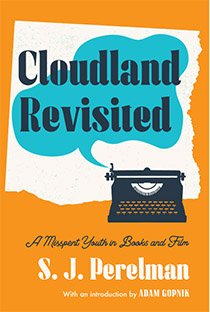
From Cloudland Revisited: A Misspent Youth in Books and Film

Publicity still of Theda Bara as The Vampire and Edward José as John Schuyler in A Fool There Was (1915), directed by Frank Powell. The legend reads, “WILLIAM FOX presents / ROBERT HILLIARD’S Greatest Success / ‘A FOOL THERE WAS’ / With EDWARD JOSE and THEDA BARA.” Hilliard, a matinee idol, played Schuyler in the hit play but was not associated with the movie. (Wikimedia Commons)
“I'm resuming the Cloudland Revisited series, but this time on some of the old movies,” S. J. Perelman wrote to Leila Hadley the day after Memorial Day in 1952. During the previous four years, he had written a series of pieces for The New Yorker in which he revisited a dozen books, from Leonie of the Jungle to The Mystery of Dr. Fu-Manchu, that he had loved as an adolescent—to the mortified bemusement of his middle-aged self. (His reappraisal of Edgar Rice Burrough’s Tarzan of the Apes was a previous Story of the Week selection.) He now planned to turn his attention to the silent movies that had equally enchanted him as a kid. The humor and success of the formula for the series springs from the “collision of young Sid with old Sid,” Adam Gopnik writes in his introduction to a new book that brings together, for the first time, all twenty-two columns. “Young Sid, who is evoked in his wide-eyed absorption of the old movies . . . is still infatuated with the stuff, while Older & Wiser Sid shakes his head retrospectively at the sheer intuitive surrealism of the story.”

“I've spent almost all the past two weeks at the Museum of Modern Art projecting ten films I plan to write about,” Perelman wrote in an update a month later.
The Museum's film division was extremely co-operative; I'd been trying to set up this scheme for about two years and had been at some pains to figure out where I could uncover the particular films I wanted, as they’ve largely disappeared. MGM finally tipped me off that the Museum has an enormous library of 14 million feet which it shares with the Eastman Foundation in Rochester, and through Monroe Wheeler, who's an old friend, its facilities were extended to aid this work. I worked with a tape recorder while the films were being shown, talking into it and describing the contents of each scene and the subtitles. I now have the secretary in the adjoining office transcribing the tape, and thus am accumulating a sizable bale of information from which I can draw quotes and descriptions of the action. A somewhat bulky method, but the only feasible one and I'm hopeful that it may result in some good material.
One of the movies Perelman mercilessly dissects is the 1915 blockbuster A Fool There Was, starring newcomer Theda Bara, whose performance launched the femme fatale archetype of the silent film era. The film was an adaptation of a hit play by Porter Emerson Browne, which was in turn inspired by Rudyard Kipling’s poem “The Vampire,” the opening line of which provides the title. As a fake newspaper clipping from one of the film’s title cards notes, Bara plays “a certain notorious woman of the vampire species” who lures, emasculates, and discards a married American diplomat, who turns out to be only the latest in a series of her victims. Bara’s debut as a film star popularized the use of the word vamp for the type of character she would play for the rest of her brief career in the movies.

To promote the film, the studio employed two New York World reporters to host an elaborate press conference in Chicago, at which they introduced the exotically costumed Theda Bara as an up-and-coming actress from Paris who was born in Egypt to the French actress Theda de Lyse and the Italian sculptor Giuseppe Bara and raised in a tent in the sands of the desert near the Sphinx. The publicists then arranged for Louella Parsons, not yet a famous gossip columnist, to “expose” this ludicrous hoax after some of the more gullible cub reporters had fallen for it. The notoriety of the ploy and the success of the movie doomed Bara, a Cincinnati native whose real name was Theodosia Goodman, to reprise the role in various guises—as Cleopatra, as Salome, as “the Vixen”—in more than forty films over the next five years.

Meanwhile, in Providence, Rhode Island, 11-year-old Sid Perelman had fallen for Theda Bara just as readily as the gaggle of cub reporters. Nearly forty years later, he sat in the comfort of the Museum of Modern Art’s spotless projection room “to ascertain whether my inflammability to Miss Bara had lessened over the years,” and the result is one of the more hilarious (yet wholly accurate) summaries of a silent film and its title cards ever written.

*   *   *
Notes: Little Egypt was the stage name of American dancer Fahreda Mazar Spyropoulos, who popularized belly-dancing with performances at the Chicago World’s Fair in 1893. In the fifteenth century, Dominican friar Tomás de Torquemada became the first Grand Inquisitor of the Spanish Inquisition. H. B. Warner was an English actor famous in the silent film era for his portrayal of Christ in Cecil B. DeMille’s The King of Kings (1927) and best known in the talkie era as Mr. Gower, the druggist in Frank Capra’s 1946 film It’s Wonderful Life. Zira was an American brand of cigarette made from Turkish tobacco. The Golden Hind was an English galleon remembered for its privateering circumnavigation of the globe from 1577 to 1580. Blanchisseuse is French for laundress. In Greek mythology, lotus-eaters are the inhabitants of an island who eat the leaves of the lotus tree, which induces a blissful lethargy and forgetfulness. Heimweh is German for homesickness. Written between 1899 and 1909, the tragedies of the Italian novelist, poet, and playwright Gabriele D’Annunzio rely on his characteristic high rhetoric rather than dramatic action.

*   *   *
If you were born anywhere near the beginning of the century and had access at any time during the winter of 1914–15 to thirty-five cents in cash, the chances are that after a legitimate deduction for nonpareils you blew in the balance on a movie called A Fool There Was. . . . If you don't see the full selection below, click here (PDF) or click here (Google Docs) to read it—free!

This selection is used by permission. To photocopy and distribute this selection for classroom use, please contact the Copyright Clearance Center.

Sunday, October 27, 2024

The Lover and the Tell-Tale

Stephen Crane (1871–1900)
From Stephen Crane: Prose & Poetry

Little Boy Writing Letter, oil on canvas by American artist Norman Rockwell (1894–1978); cover illustration for The Saturday Evening Post, January 17, 1920. The discarded draft at the boy’s feet reads, “dear sweethart i luve you more and more every day.”

Rockwell wrote to the first owner of the painting: “There is a real original for the boy and I often use him. His name is Eddy Carlson and he is a fine little model. You might be glad to know that I always use real persons for every picture I paint. The idea of the red headed boy picture was suggested to me one day when one of the little boys I use for a model, was in my studio trying to write a letter to his girl. He presented much the same picture as the one I painted, only I made it a country boy with country surroundings.” (Image and Rockwell quote courtesy of Sotheby’s)
Little Lord Fauntleroy was the Harry Potter of its day,” writes Gretchen Holbrook Gurzina in her biography of the novel’s author, Frances Hodgson Burnett. “In a few years, after the book hit the stage, there would be no one from the smallest midwestern American town to the streets of Paris who had not heard of Cedric, and who did not know what he looked like.” Published in 1886, the novel relates the tale of a poor New York City boy who becomes heir to an earldom after the death of his father, a British aristocrat alienated from the family in England. An immediate success, the book sold hundreds of thousands of copies and went through more than thirty American printings in two years.

Just as famous were the book’s illustrations by Reginald B. Birch. Burnett had sent him as a model a photograph of her son Vivian in a velvet suit with a lace collar. The suit and the long curls of hair depicted in Birch’s illustrations became all the rage—often to the consternation of the boys made to wear them by their mothers. The fashion trend swelled when Burnett’s stage adaptation opened on Broadway in December 1888 and became as big a hit as the book, eventually going on tour. “All across the country, boys who escaped the lace collars the first time around found themselves forced into them now,” writes Gurzina. “The androgyny of the Fauntleroy look, not helped by girls playing the boy on stage, caused boys dressed in the suits to be taunted on the streets.”

Stephen Crane loathed Burnett’s novel. His first biographer, Thomas Beer, relates that in 1894 Crane encountered two boys sporting long curls and Fauntleroy suits, and he gave them money to get their hair cut—much to the distress of their mothers. The incident, possibly apocryphal or at least embellished, is described with different details in another magazine article, in which a grateful father sent the author a box of cigars. Crane wrote his Whilomville stories partly in reaction to Burnett’s sentimental ideal of childhood and Cedric’s wholesome innocence; perhaps tellingly, in one story, the town’s mothers are horrified when they learn that all the children in the gang—boys and girls—get their curly locks shaved off by the local barber. Yet Crane’s stories were not written for children but about children, and one contemporary critic noted that they seemed “more natural” to her than most other stories about young people. “True, the children have the same marvelous predilection for getting into mischief, an equally marvelous ability for making their elders uncomfortable; nevertheless, the stories emphasize more the appreciative and humorous study of the healthiest side of child life.”

When a friend teasingly compared the series to Burnett’s best seller, Crane responded, “If the Whilomville stories seem like Little Lord Fauntleroy to you, you are demented and I know that you are joking, besides. See here, my friend, no kid except a sick little girl would like Lord Fauntleroy unless to look at Birch's pictures for it. The pictures are all right.” Set in opposition to Burnett’s novel and its many imitations, Crane’s story cycle breathed new life into an American literary tradition often referred to as “bad boy literature,” which includes Thomas Bailey Aldrich’s The Story of a Bad Boy (1870), Mark Twain’s The Adventures of Tom Sawyer (1875), and William Dean Howells’s A Boy's Town (1876)—each about childhood life in a small town. The thirteen Whilomville stories, published monthly in Harper’s from mid-1899 through mid-1900, were collected in a book in August 1900, two months after Crane’s death. An earlier story, “His New Mittens,” appeared in a previous collection, along with the Whilomville novella “The Monster,” a much darker and more serious work usually not considered part of the series.

Most prominent among the Whilomville children is Crane’s preadolescent alter ego, Jimmie Trescott, a boy “versed in villainy” who is neither the gang’s leader nor their fool. Most of the tales focus on the misadventures, pranks, and rivalries of Jimmie and his friends, along with the perplexed reactions of the town’s adults. “When all is said and done, however,” writes the late Paul Auster in his recent biography of Crane, “the most effective stories are the ones in which a child from another place comes to Whilomville and disturbs the balance of that closed-off world.” Auster singles out Cora, the “angel-child” from New York City who appears in three stories—and who shares the name of Crane’s common-law wife. One summer, the Trescott family is visited by a relative, who is a famous painter, and his wife:
They had one child. Perhaps it would be better to say that they had one CHILD. It was a girl. When she came to Whilomville with her parents, it was patent that she had an inexhaustible store of white frocks, and that her voice was high and commanding. These things the town knew quickly. Other things it was doomed to discover by a process.
Cora proceeds to lay waste to the always-fragile tranquility of the children and their parents—and especially to the dignity of Jimmie, who “was in love. The beauty of his regal little cousin has stolen his manly heart.” In “The Lover and the Tell-Tale,” her influence persists in absentia when, after her return to New York, Jimmie writes her a love letter—with humiliating results.

*   *   *
When the angel-child returned with her parents to New York the fond heart of Jimmie Trescott felt its bruise greatly. . . . If you don't see the full selection below, click here (PDF) or click here (Google Docs) to read it—free!

This selection may be photocopied and distributed for classroom or educational use.

Sunday, October 20, 2024

The Facts in the Case of M. Valdemar

Edgar Allan Poe (1809–1849)
From Edgar Allan Poe: Poetry & Tales

“‘I have been sleeping—and now—now—I am dead.’ No person present even affected to deny, or attempted to repress, the unutterable, shuddering horror which these few words, thus uttered, were so well calculated to convey. Mr. L——1 (the student) swooned. The nurses immediately left the chamber, and could not be induced to return.” Illustration (cropped) by British artist Byam Shaw (1872–1919) for Selected Tales of Mystery by Edgar Allan Poe (London, 1909).

In 1844 Chauncy Hare Townshend, the author of Facts in Mesmerism—a book Edgar Allan Poe regarded “as one of the most truly profound and philosophical works of the day”—described an experience with mesmeric therapy:
I have watched the effects of mesmeric treatment upon a suffering friend, who was dying of that most fearful disorder—Lumbar Abscess. Unfortunately, through various hindrances, Mesmerism was not resorted to till late in the progress of the disease, so that, of course, that it should effect a cure was out of the question. Mesmerism does not profess to work miracles. It cannot restore a decayed bone to its integrity, or re-create a missing part;—but it can benefit, even where it cannot save. And how much is it to say of a power—that it is remedial even where not curative, and that in cases where it fails to rekindle life it can smooth the passage to the grave, and mitigate the horrors of physical pain! . . .

I have no hesitation in saying, that, under God, the life of my friend R. T. was prolonged, at least, two months by the action of Mesmerism.
During the 1840s mesmerism fascinated Poe, who could turn even the most promising advances of the era into the stuff of nightmares, and it stirred him to write a trio of stories. In 1844 he published “A Tale of the Ragged Mountains” and “Mesmeric Revelation,” and the following year, inspired in part by the experience of Townshend’s dying friend, he wrote the best known of the three, “The Facts in the Case of M. Valdemar.”

For the last 180 years, most readers and even many scholars seem to have assumed that mesmerism in Poe’s stories was simply the act of hypnotism. In an analysis of all three stories, Doris V. Falk reminds readers that hypnotism in Poe’s day was considered only one element of what mesmerists called “animal magnetism”: “an autonomous physical force pervading both the animate and inanimate worlds, accounting for the mesmerists’ therapeutic powers at the same time that it attracted iron to magnets [and] kept the stars in their places.” The influence of this pseudoscience on literature was vast; Falk drolly notes that it gave rise to “a popular contemporary genre, the dream vision or prophecy [which] probably constituted the greatest volume of unreadable effusions ever to pollute a literary atmosphere.”

In Poe’s stories, however, mesmerism becomes (as Falk puts it) “an amoral force operating within the mind and body, linking consciousness and ‘physique,’ animating both.” Thus, in Poe’s story “Mesmeric Revelation,” a dying man in a “sleep-waking” state explains that “there are gradations of matter of which man knows nothing; the grosser impelling the finer, the finer pervading the grosser. . . . The ultimate, or unparticled matter, not only permeates all things but impels all things—and thus is all things within itself. This matter is God. What men attempt to embody in the word ‘thought,’ is this matter in motion.”

Poe’s fascination seems to have focused on how this “force” or “matter” might operate when the mind straddles the boundary between life and death. In “Mesmeric Revelation,” the man is dead when the mesmerist awakens him from the trance, which leaves open the question of whether he had been talking to the mesmerist from “the region of the shadows.” Or, as another prominent scholar, Paul John Eakin, explains, “Mesmerism seemed to offer a means by which the barrier between the angelic and the mortal realms might be crossed by a living man.”

What Poe apparently had not anticipated when he published “The Facts in the Case of M. Valdemar” was that many readers would believe it was a true story. “I had not the slightest idea that any person should credit it as any thing more than a ‘Magazine-paper,’” he wrote to one of his publishers four years later. Yet Poe was hardly an author who would dampen the kind of publicity generated by the debate over whether the “case” was genuine. After the story appeared in the December 1845 issue of the American Review, under the title “Facts of M. Valdemar's Case,” a New-York Daily Tribune critic contended that it was “a pretty good specimen of Poe's style of giving an air of reality to fictions,” and that any reader who thought the events actually occurred “must have the bump of Faith large, very large indeed.” Without addressing the veracity of Valdemar’s case, Poe coyly responded in the Broadway Journal (the weekly newspaper he owned and edited), “Why cannot a man's death be postponed indefinitely by Mesmerism? Why cannot a man talk after he is dead? Why? — Why? — that is the question; and as soon as the Tribune has answered it to our satisfaction we will talk to it farther.” He then stirred things up some more by reprinting the story in the Broadway Journal with a headnote:
An article of ours, thus entitled, was published in the last number of Mr. Colton's “American Review,” and has given rise to some discussion—especially in regard to the truth or falsity of the statements made. It does not become us, of course, to offer one word on the point at issue. We have been requested to reprint the article, and do so with pleasure. We leave it to speak for itself. We may observe, however, that there are a certain class of people who pride themselves upon Doubt, as a profession.
Soon enough, the story worked its way across the Atlantic. While the London Morning Post reprinted it with an editor’s note suggesting it was “either a fabrication or the work of one little acquainted with consumption,” the Popular Record of Modern Science published the piece with a statement weighing the evidence and concluding “there is no strong point for disbelief. . . . The circumstances are, as the Post says, ‘wonderful,’ but so are all circumstances that come to our knowledge for the first time—and in mesmerism everything is new.”

A few weeks earlier, Poe had published The Raven and Other Poems, with a dedication to Elizabeth Barrett Browning, and he sent a copy to her in England along with his recent Tales. She responded with words of thanks and praise, adding:
Then there is a tale of yours which I do not find in this volume, but which is going the round of the newspapers, about mesmerism—throwing us all into “most admired disorder”, or dreadful doubts as to whether “it can be true”, as the children say of ghost stories. The certain thing in the tale in question is the power of the writer, & the faculty he has of making horrible improbabilities seem near & familiar.
In a subsequent letter to her husband, Robert Browning, Elizabeth joked they would need to “decide whether the outrageous compliment to me or the experiment on M. Vandeleur [sic] goes furthest to prove him mad.”

While Poe did little publicly to dampen the debate over the veracity of the story, he usually admitted the truth in personal correspondence. Arch Ramsay, “a believer in Mesmerism” living in Scotland, wrote and asked if Poe would deny, “for the sake of the Science & of truth,” that the story was a “hoax.” Poe responded bluntly, “‘Hoax’ is precisely the word suited to M. Valdemar's case. . . . Some few persons believe it—but I do not—and don’t you.”

Notes: The Latin phrase in articulo mortis translates “in the moment of death.” Wallenstein is a trilogy of epic historical dramas by Friedrich Schiller, first performed in 1798–99; they chronicle the fall and assassination of General Albrecht von Wallenstein during the Thirty Years War. Gargantua refers to François Rabelais’s The Five Books of the Lives and Deeds of Gargantua and Pantagruel, a sixteenth-century pentalogy of satirical novels relating the adventures of two giants. Phthisis is a consumptive disease, usually pulmonary tuberculosis.

*   *   *
Of course I shall not pretend to consider it any matter for wonder, that the extraordinary case of M. Valdemar has excited discussion. . . . If you don't see the full selection below, click here (PDF) or click here (Google Docs) to read it—free!

This selection may be photocopied and distributed for classroom or educational use.

Sunday, October 13, 2024

The Federal Elections Bill of 1890

Thomas E. Miller (1849–1938)
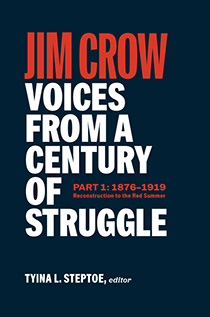
From Jim Crow: Voices from a Century of Struggle (Part One: 1876–1919)

“The Political Pinkertons,” by American political cartoonist Grant Hamilton (1862–1926) for the July 30, 1892, issue of Judge. A caption in the magazine reads: “The Northern press is unanimous in condemnation of the employment of Pinkertons against labor in the North, but who hears a word of protest from the Southern press against this band of organized bulldozers and murderers that sacrifices thousands of lives every year?” The various posters on the wall read: "Vote inside. No Negro votes taken. The Constitution gives the Negro the right to vote — but what care we for the Constitution — Voting done inside by whites only K.K.K." (Courtesy of the New York Public Library)
“I have been reminded that to make this speech may cost me my seat,” Representative Thomas E. Miller of South Carolina concluded in an address to his colleagues in Congress on February 14, 1891. “I shall not be muffled here. Muffled drums are instruments of the dead. I am in part the representative of the living; of those whose rights are denied; of those who are slandered by the press, on the lecture platform, in the halls of legislation, and oftentimes by men in the livery of heaven, and I deem it my supreme duty to raise my voice, though feebly, in their defense.”

It was the second—and last—speech Miller gave from the House floor as a member of Congress. He was one of the last five African American members of the House in the nineteenth century; no Black candidates would be elected to Congress from 1900 to 1928, and none from a Southern state until 1972. Miller ran in November 1888 in a Sumter County district that was more than 80% African American—gerrymandered to contain (and control) most of the region’s Black population. His opponent was the white Democratic incumbent, William Elliott, who claimed victory and was seated in the new Congress. Miller contested the election on the grounds that most Black voters had been prevented from casting ballots, and on September 23, 1890, with only a week remaining in the first session of the 51st Congress, the Republican-controlled House voted to seat him in Elliott’s place. For the remaining months of the term, he was the only Republican in the seven-member delegation from South Carolina.

That November, Miller defeated Elliot in an election rematch but lost the seat when the canvassing board in South Carolina threw out most of Miller’s ballots, allegedly for being improperly printed. He again contested the election results, but the new Congress, now controlled by Democrats, seated Elliott. Thus, although elected to two two-year terms as a congressman, Miller effectively served in the House only for the three-month session from December 1, 1890, to March 3, 1891. (Before the passage of the Twentieth Amendment, newly elected members were sworn in on March 4, and the House typically met for one “long session” of five to ten months and a “short session” that usually took place the three months before the next Congress was sworn in.)

Thomas Ezekiel Miller was born in South Carolina in 1849 and raised by Richard and Mary Miller, a couple recently freed from slavery. Rumors about his parentage trailed him for much of his life; in 1936, he told an interviewer that he had learned that his biological father came from a wealthy white family and that his light-skinned mother was “said to be” the mixed-race daughter of Judge Thomas Heyward Jr., one of the signers of the Declaration of Independence, whose family controlled one of the largest slaveholdings in the country. Thomas’s biological parents may have been separated by their families to avoid scandal, and he was then given to the Millers. During one Republican primary, his darker-skinned opponent all but accused him of passing for African American and claimed Miller was only “one-sixty-fourth Black.”

As a teenager, Miller distributed newspapers on the railroad, working his way up to assistant conductor on the Savannah-Charleston line. When the Confederate Army took control of the railroads, employees were required to wear the uniform, and he was eventually captured by Union forces and spent two weeks in a Savannah prisoner camp. After the war, he moved north, eventually enrolled at Lincoln University in Pennsylvania, and graduated in 1872. He then returned home to study law at the newly integrated University of South Carolina, where he graduated with the last class before Democrats assumed power in the state and shut down the university. (It reopened three years later as an all-white agricultural college.) During the 1870s and 1880s, he served several terms in the state legislature before running for Congress.

The 1888 election had given the Republicans simultaneous control of the White House, the Senate, and the House of Representatives for the first time since 1875, and they launched a renewed effort to protect black suffrage in the South from fraud and discrimination. The Federal Elections Bill proposed by Henry Cabot Lodge of Massachusetts would authorize federal officials to supervise voter registration, polling procedures, and ballot counting in congressional elections. The bill passed the House, 155–149, on July 2, 1890, with no Democrats voting in favor. When the Senate finally took up the bill in December, it was filibustered by the Democrats. During this stalemate, Democrats in the House tried to attach to an army appropriations bill a sham amendment prohibiting the use of federal troops at polling places—something that Lodge’s bill did not even authorize—and in response Miller delivered his first Congressional speech, which we present below. On January 22, 1891, the Senate voted, 35–34, to postpone further debate on the Federal Elections Bill, and it was never again brought up for consideration.

After leaving Congress, Miller served one last term in the state assembly and then convinced his longtime political nemesis Benjamin Tillman, an outspoken white supremacist elected to two terms as governor and four terms as U.S. Senator, to support the establishment of a new all-Black land-grant institution, the Colored Normal, Industrial, Agricultural, and Mechanical College (now South Carolina State University). Miller agreed to leave politics, and he served as the school’s president for fifteen years. He died at the age of 88 in 1938. On his gravestone is inscribed, “I served God and all the people, loving the white man not less, but the Negro needed me most.”

Notes: Miller refers to a speech given by John Hemphill, a Democrat from South Carolina and the opposition floor leader the previous summer during the House debate on the elections bill. Hemphill’s harangue had argued that the bill was crafted to put “the colored man” in “control of the government of the Southern States.” Byron M. Cutcheon, who yielded to Miller to allow him to continue speaking past his time limit, was a Republican from Michigan.

Miller also makes several comments about the newly elected South Carolina governor, Benjamin Tillman. In his inaugural address, delivered on December 4, 1890, Tillman said, “We deny, without regard to color, that ‘all men are created equal;’ it is not true now and was not true when Jefferson wrote it.” Miller also opposed Tillman’s plans for decimating state-funded public education; the governor proposed repealing the amendment to the South Carolina state constitution adopted in 1878 that provided for the levying of a 0.2% state property tax in support of public schools, and he opposed state support of The Citadel and called for the University of South Carolina to be stripped of its agricultural and mechanical department and reorganized as a smaller, more elite college.

*   *   *
For this week’s selection, we depart from the usual format and reproduce the selection, in its entirety, below.
You may also download it as a PDF or view it in Google Docs.

Speech in Congress on the Elections Bill

Mr. MILLER. Mr. Chairman, it is late in the day and in the session, but some things are being said to which I should like to reply. To hold office is a precious gift, and the race to which I belong are desirous of it, but there are gifts superior to office. Gentlemen talk about the North and about its not giving negroes representation on their tickets. That is not the thing we are suffering most from in the South.

There are other things of more importance to us. First is the infernal lynch law. That is the thing we most complain of. It is a question whether when we go to work we will return or not. Second, they have little petty systems of justices who rob us of our daily toil, and we can not get redress before the higher tribunals. Third, we work for our task-masters, and they pay us if they please, for the courts are so constructed that negroes have no rights if those rights wind up in dollars and cents to be paid by the white task-masters.

They speak about pure elections and call the election law a force law. Do not gentlemen from the South boast here in their speeches that it is the white man’s right to rule and to control elections, and if they can not control them by a majority vote they will control them by force or fraud? Take the speech delivered by my colleague from South Carolina [Mr. HEMPHILL], and you will see his brazen-faced boast that it is his right to remain here even without votes; and then when we have an appropriation bill the North is to be taunted with not giving negroes representation upon their tickets.

Yes, gentlemen, we want office; but the first and dearest rights the negro of the South wants are the right to pay for his labor, his right of trial by jury, his right to his home, his right to know that the man who lynches him will not the next day be elected by the State to a high and honorable trust; his right to know that murderers shall be convicted and not be elected to high office, and sent abroad in the land as grand representatives of the toiling and deserving people.

These are rights that we want; and we call upon you gentlemen of the North to speak for us and ask the Chamber over yonder to give us an election law — not a force law — a national law, Mr. Chairman, that will compel the people of the South to register the votes of the negro and the white man alike, and count them as they are cast, and let the wishes of those people in this American country be expressed here by duly elected Representatives of their States. [Applause on the Republican side.]

The sickly sentiment about not giving negroes positions in the North! The negroes of the North have their schoolhouses. Taxes are levied and schoolhouses supported. What do we find in South Carolina, where the Democrats rule? First, the newly elected governor, who claims to stand upon the platform of Jefferson’s principles, denies that all men are born free and equal and endowed with equal rights by their Creator. In his annual message to the Legislature he asks for the annihilation of the public-school system which is bringing South Carolina out of the bog of ignorance that she is in to-day and fast placing her along in the phalanx of other States in prosperity.

The CHAIRMAN. The time of the gentleman has expired.

Mr. CUTCHEON. I yield the gentleman five minutes more of my time.

Mr. MILLER. Why, Mr. Chairman, the governor in his annual message, to re-establish ignorance, desires to close the schoolhouse door against the poor children by creating class schools. Yes; that is the way. What does he recommend? He recommends that the constitutional guaranty of a 2-mill tax be abolished; that communities be left to themselves to levy school taxes; and to the community shall also be left the right to say whether the education of the rich man’s son or the education of the poor man’s son shall be supported by the taxes levied. How do they seek to do it? The largest taxpayers are those people generally who have not many children; and as they are compelled by the State law to pay a tax, it is to be left to them whether it shall be used to educate the poor man’s child or whether it shall be used to educate their children. It amounts to having no educational system at all and is the destruction of the school system down there. Then they come North and speak about the bitterness of sectionalism, while right there in our Southland country, for want of experience, the governor of South Carolina recommends the destruction of the school system, which has been erected upon the promise of universal education.

What else does he do? He recommends the abolishment of two colleges established, by my assistance, to educate the white young men that they may know how to lead the old State up out of poverty and ignorance. Ah, gentlemen, what we need in this land is not so many offices. Offices are only emblems of what we need and what we ought to have. We need protection at home in our rights, the chiefest of which is the right to live. First, the right to live, and next the right to own property and not have it taken from us by the trial justices. I will read you an illustrative chapter, if gentlemen will allow me the time. A Democratic lawyer from my State, Mr. Monteith, speaking about the trial-justice system as sustained by the Democratic party of that State, says that under it no man is secure in his rights, and he gives a picture like this.

I hope gentlemen will listen. A negro was employed to plow for a white man for $10 a month. This man had a game hen. The hen was lost, and simply because the negro was plowing there he was assumed to be guilty of stealing her, was tried and sentenced to imprisonment, and they chained him by his hands to the plow, but before the thirty days of his sentence expired the good old game hen, with fourteen chicks, came out from under the barn where she had been “setting.” [Laughter and applause.] The same gentleman gives another illustration which will bring the blush of shame to the face of every white man. A negro woman, in the absence of her husband, got into a dispute with a white neighbor concerning a boundary line, a question which the trial justices have no right to settle; but they take such a question when it comes before them and whip it around and whip it around until they manage to work it into a criminal case. They put this woman on trial in his absence, and, although her attorney pleaded that she was in a condition in which women can not go to court, she was tried, convicted, and sentenced; and a white constable went to her house, two hours after she had become a mother, dragged her from a sick bed and carried her 15 long miles, to the very seat and center of the intelligence of our State, old Columbia. There, to the honor of the jailer and his white wife, they called together several women, white and black, and they ran that inhuman constable away from the jail and took the poor woman and made her an object of charity.

These are some of the outrages that are inflicted upon my people in the Southland which this “force” bill, as you call it, will protect them from; because, if we get it, instead of seeing South Carolina represented as she has been in this Congress by seven Democrats, you will find six or seven Republicans here. The offices will not go around among the Democrats, and then the spirit of fight that made them secede will make them break up the Democratic party and we shall have peace. [Applause on the Republican side.]

Originally published in the Congressional Record, 51st Congress, 2nd Session.