From George Washington: Writings
“What Factors Finally Pushed the Second Continental Congress to Declare Independence in July 1776?” (Jamestown-Yorktown Foundation)
“Washington’s War Against Smallpox: The Revolutionary Inoculation Campaign” (René F. Najera, History of Vaccines)
Previous Story of the Week selections
• “The Evacuation of Boston,” John Bowater
• “The Battle of Long Island,” Philip Vickers Fithian
• “The natural right of all Men—& their Children,” Lancaster Hill, et al.
Buy the Book
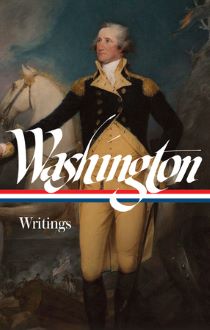 George Washington: Writings
Over 440 letters, addresses, and other documents | 1,149 pages
List price: $50.00
Web Store price: $35.00
 |
| “Washington Taking Command of the American Army—At Cambridge, Mass. July 3rd, 1775.” Hand-colored lithograph by Currier & Ives for the U.S. Centennial in 1876. Courtesy The Metropolitan Museum of Art. |
The Congress . . . have directed me to write to you, and request, that you will repair to Philadelphia as soon as you can conveniently, in order to consult with Congress, upon such Measures as may be necessary for the carrying on the ensuing Campaign. I hope the Situation of the great Affairs with which you are entrusted, will admit your making this Excursion, which I apprehend may be serviceable to your Health. In which Case, I request the Favour that you will please to honour me with your and your Lady’s Company at my House, where I have a Bed at your Service during your Continuance here, and where every Endeavour of mine and Mrs Hancock, shall be exerted to make your Abode agreeable. I reside in an airy, open Part of the City in Arch Street and fourth Street. If this should be agreeable to you, it will afford me much Pleasure.“Since writing the foregoing,” Hancock added in a postscript, “I have been Told that your Lady, not having had the Small Pox, has intentions of taking it by Inoculation in this City . . . and you may Depend Mrs Hancock will give the greatest Attention to your Lady should she incline to Take the Disorder.”
Of foremost concern to members of the Continental Congress, as well as to Washington, was the lack of clarity regarding what the British were planning to do next. “I am really at a loss what to advise, as it is impossible at present to know the designs of the enemy,” Washington had written to the delegates in late April.
Should they send the whole force under General Howe up the river St. Lawrence, to relieve Quebec and recover Canada, the troops gone and now going will be insufficient to stop their progress; and should they think proper to send that or an equal force this way from Great Britain, for the purpose of possessing this city and securing the navigation of Hudson’s River, the troops left here will not be sufficient to oppose them; and yet, for any thing we know, I think it not improbable they may attempt both; both being of the greatest importance to them, if they have men.An additional concern was the possibility that British forces might attempt to take back Boston, which they had abandoned in March, although Washington doubted they would be able or willing to do so. After the British evacuation of Boston, he had moved his headquarters to Manhattan, because nothing “seemed of more importance in the execution of their grand Plan than possessing themselves of Hudson’s River.” Nevertheless, he wrote on May 9, “if Congress from their knowledge, information, or believe, think it best for the General good of the Service that I should go to the Northward, or elsewhere, they are convinced I hope that they have nothing more to do than signify their commands.” The colonists’ worries were amplified by the increasing evidence supporting rumors that the British had hired ten thousand Hessian mercenaries who were on their way to America.
On May 21 Washington set out for Philadelphia and, after stopping to inspect rebel forces in Perth Amboy and on Staten Island, he arrived on Thursday, May 23. Martha Washington submitted herself for smallpox inoculation that same day; at that time, inoculation was done by undergoing a milder form of the disease and required days of isolation and recovery. Washington first appeared before the Continental Congress on Friday and the major concern that day was the woeful condition of the American forces in Canada. The newly appointed commanding officer, General John Thomas, reported that he had arrived at the American camp outside Quebec in early May to discover that “there were one thousand nine hundred men, only one thousand of whom were fit for duty, including officers; the rest were invalids, chiefly with the small-pox.” The enlistments for three hundred of them would end on May 15, only 150 pounds of gunpowder and six days’ worth of provisions remained, and the local inhabitants, including the French, were disinclined to help them. The Americans had been repulsed by a well-supplied British force numbering more than one thousand men, and they were in retreat toward Montreal from Quebec, which the rebels had feebly placed under siege.
The Continental Congress appointed a special committee to discuss the provision of American forces with Washington, as well as Major General Horatio Gates and Brigadier General Thomas Mifflin. After their deliberations, the committee reported that they remained “fully convinced of the absolute necessity of keeping possession of that country [Canada], and that they expect the forces in that department will contest every foot of the ground with the enemies to these colonies.” The Continental Congress ultimately approved raising a force of “13,800 militia from Massachusetts, Connecticut, New York, New Jersey [to] reinforce the army at New York” and another six thousand men to rescue Canada. “Our Affairs in Canada have of late worn a displeasing Aspect, but Measures have been adopted which I trust will repair Misfortunes and set Matters right in that Quarter,” Samuel Adams wrote to James Warren, president of the Massachusetts Provincial Congress, on June 6.
Unfortunately, the Continental Congress acted far too late. After contracting smallpox, General Thomas died on June 2, British troops defeated rebel forces at Trois Rivieres on June 8, and the Americans evacuated Montreal and began their retreat from Canada.
Weeks before, on May 15, the Fifth Virginia Convention had passed a resolution instructing its delegates to the Continental Congress to introduce a motion for independence. Washington’s brother, John Augustine, attended the Convention in place of Richard Henry Lee, who was in Philadelphia as a delegate. Washington learned of Virginia’s resolution during his visit, and he expressed his approval in the letter to his brother that we reprint below. Although the letter is dated May 31, it was most likely finished and sent as he was leaving Philadelphia on June 4, the “13th day” after Martha’s inoculation. Washington arrived in New York on June 6, and the next day Lee submitted to the Continental Congress the resolution calling for independence and urging the formation of foreign alliances. The proposal for an immediate declaration of independence met with opposition, however, and any decision concerning the liberation of the colonies was postponed for a later day.
Dear Brother,
Since my arrival at this place, where I came at the request of Congress, to settle some matters relative to the ensuing Campaign I have received your Letter of the 18th from Williamsburg, & think I stand indebted to you for another, which came to hand sometime ago, in New York.
I am very glad to find that the Virginia Convention have passed so noble a vote, with so much unanimity—things have come to that pass now, as to convince us, that we have nothing more to expect from the justice of G: Britain—also, that She is capable of the most delusive Arts; for I am satisfied that no Commissioners ever were design’d, except Hessians & other Foreigners; and that the Idea was only to deceive, & throw us off our guard—the first it has too effectually accomplished, as many Members of Congress, in short, the representation of whole Provences, are still feeding themselves upon the dainty food of reconciliation; and thô they will not allow that the expectation of it has any influence upon their judgments (with respect to their preparions for defence) it is but too obvious that it has an operation upon every part of their conduct, and is a clog to their proceedings—it is not in the nature of things to be otherwise, for no Man, that entertains a hope of seeing this dispute speedily, and equitably adjusted by Commissioners, will go to the same expence, and run the same hazards to prepare for the worst event as he who believes that he must conquer, or submit to unconditional terms, & its concomitants, such as Confiscation, hanging, &ca, &ca.
To form a new Government, requires infinite care, & unbounded attention; for if the foundation is badly laid the superstructure must be bad. too much time therefore, cannot be bestowed in weighing and digesting matters well—we have, no doubt, some good parts in our present constitution—many bad ones we know we have, wherefore no time can be misspent that is imployed in seperating the Wheat from the Tares—My fear is, that you will all get tired and homesick, the consequence of which will be, that you will patch up some kind of Constitution as defective as the present—this should be avoided—every Man should consider, that he is lending his aid to frame a Constitution which is to render Million’s happy, or Miserable, and that a matter of such moment cannot be the Work of a day.
I am in hopes to hear some good Acct from No. Carolina—If Clinton has only part of his force there, and not strongly Intrenchd, I should think Genl Lee will be able to give a very good Acct of those at Cape Fare—Surely Administration must intend more than 5000 Men for the Southern district, otherwise they must have a very contemptable opinion of those Colonies, or have great expectation of assistance from the Indians, Slaves, & Tories. We expect a very bloody Summer of it at New York & Canada, as it is there I expect the grand efforts of the Enemy will be aim’d; & I am sorry to say that we are not, either in Men, or Arms, prepared for it. however, it is to be hoped that if our cause is just, as I do most religiously believe it to be, the same Providence which has in many Instances appeard for us, will still go on to afford its aid.
Your Convention is acting very wisely in removing the disaffected, Stock, &ca from the Counties of Princess Anne & Norfolk; and are much to be commended for their Attention to the Manufacture of Salt, Salt Petre, Powder, &ca. No time, nor expence should be spared to accomplish these things.
Mrs Washington is now under Innoculation in this City; & will, I expect, have the Small pox favourably—this is the 13th day, and she has very few Pustules—she would have wrote to my Sister but thought it prudent not to do so, notwithstanding there could be but little danger in conveying the Infection in this Manner. She joins me in love to you, her, and all the little ones4—I am with every Sentiment of regard, Dr Sir Yr Most Affecte Brother
Text from The Papers of George Washington: Revolutionary War Series, volume 4 (1984). Courtesy of the University Press of Virginia.