From F. Scott Fitzgerald: The Great Gatsby, All the Sad Young Men & Other Writings 1920–1926
Interesting Links
“F. Scott Fitzgerald’s Shimmering Visions” (Sam Tanenhaus, The New Republic)
“On My Grandfather’s Novel: F. Scott Fitzgerald’s The Great Gatsby at 100” (Eleanor Lanahan, Literary Hub)
Previous Story of the Week selections
• “How to Live on $36,000 a Year,” F. Scott Fitzgerald
• “His Father’s Son,” Edith Wharton
• “The Night We All Had Grippe,” Shirley Jackson
Buy the book
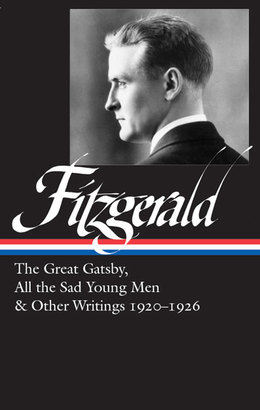 F. Scott Fitzgerald: The Great Gatsby, All the Sad Young Men & Other Writings 1920–1926
Includes 25 short stories and 9 essays | 756 pages
List price: $35.00
Web store price: $28.00
“F. Scott Fitzgerald’s Shimmering Visions” (Sam Tanenhaus, The New Republic)
“On My Grandfather’s Novel: F. Scott Fitzgerald’s The Great Gatsby at 100” (Eleanor Lanahan, Literary Hub)
Previous Story of the Week selections
• “How to Live on $36,000 a Year,” F. Scott Fitzgerald
• “His Father’s Son,” Edith Wharton
• “The Night We All Had Grippe,” Shirley Jackson
Buy the book
F. Scott Fitzgerald: The Great Gatsby, All the Sad Young Men & Other Writings 1920–1926Includes 25 short stories and 9 essays | 756 pages
List price: $35.00
Web store price: $28.00
 |
| Printing proofs for two illustrations by American artist Rose Cecil O'Neill (1874–1944) for Fitzgerald’s “The Baby Party” in the February 1925 issue of Hearst’s International. Images courtesy Drury University Art Collection. |
Alice Hall Petry, in her influential study Fitzgerald’s Craft of Short Fiction, cautions readers to take Fitzgerald’s self-deprecating dismissal of those ten stories with a grain of salt:
Fitzgerald tended to write to “Bunny” Wilson when he was most depressed (or drunk) or most ebullient, and his letters to him are full of the kind of histrionic poses that creep so readily into letters to old friends. Such is the case with this letter, and one must not take literally the implication that every one of the stories written during this period [was] just “trash” to their author.Fitzgerald wrote one of the stories, “The Baby Party,” during a single night in February 1924. Although it has since experienced a mixed critical and scholarly reception, it became one of his most popular stories during his lifetime. Far from dismissing it as trash, Fitzgerald wrote several friends urging them to read it when it was published. “‘The Jellybean’ is junk!” he wrote to the novelist Thomas Boyd, who had commented on one of Fitzgerald’s early stories from Tales of the Jazz Age. “I've written a fine story called ‘The Baby Party’ (a bit soft but good stuff) that will appear in Hearsts.” Years later, when he was searching for a publisher in England willing to publish a “best of” collection, “The Baby Party” was among the proposed selections. Malcolm Cowley, who included it in the posthumously published collection The Stories of F. Scott Fitzgerald, commented, “far from being trash, . . . it is Fitzgeralds’s one expedition into the field of domestic comedy.”
Petry argues, however, that the story offers the reader much more than a mere “domestic comedy”; instead, it reflects Fitzgerald’s “growing awareness that our children are a means of making a permanent mark on the world.” When the story was included in Fitzgerald’s third collection, All the Sad Young Men, a reviewer in Time Magazine observed that “the reader’s laugh is sobered by a glimpse of the combatants’ real motive, the ache for immortality.” Fitzgerald wrote this story about a two-and-a-half-year-old toddler when his own daughter, Scottie, was exactly that age, and, as Petry explains, “little Ede embodies some of the grown-up Edith in much the same way that little Scottie Fitzgerald embodies part of her father Scott.”
A decade later, the journalist Vernon Mckenzie wrote to Fitzgerald and asked how he came to write several of his most popular stories. About “The Baby Party” he replied simply that he “went to one—saw just a moment of bitterness between two women. Was drawn in spiritually on wife’s side. Imagined the same scene among stupid people with less self-control—and its consequences.”
* * *
When John Andros felt old he found solace in the thought of life continuing through his child. . . . If you don't see the full selection below, click here (PDF) or click here (Google Docs) to read it—free!This selection may be photocopied and distributed for classroom or educational use.